Finding skilled software developers who deliver quality work, meet deadlines, and fit within budget is a challenge for many businesses today. Hiring locally has become slower, more expensive, and more competitive, especially for companies that need to move quickly.
In such a scenario, India offers a strong solution to any requirements related to hiring remote teams for effective project management and cost optimization.
With a large number of skilled software developers, affordable engagement models, and a time-zone advantage that supports round-the-clock productivity, India has become a premium outsourcing destination for companies looking for reliable tech talent. If you want a broader perspective on why India continues to lead globally, read: India has become a premium outsourcing destination.
Why Should You Hire Indian Programmers?
You may still come across outdated assumptions that Indian engineers are only chosen for lower costs or that they are best suited for support-level work. That view no longer reflects the current market.
In reality, India has developed into one of the strongest global destinations for software development and offshore delivery. Companies now turn to India not only for budget efficiency, but also for access to skilled developers, modern engineering practices, and flexible team structures that can support both short-term execution and long-term product growth.
1. Gain Access To Top-Skilled Developers
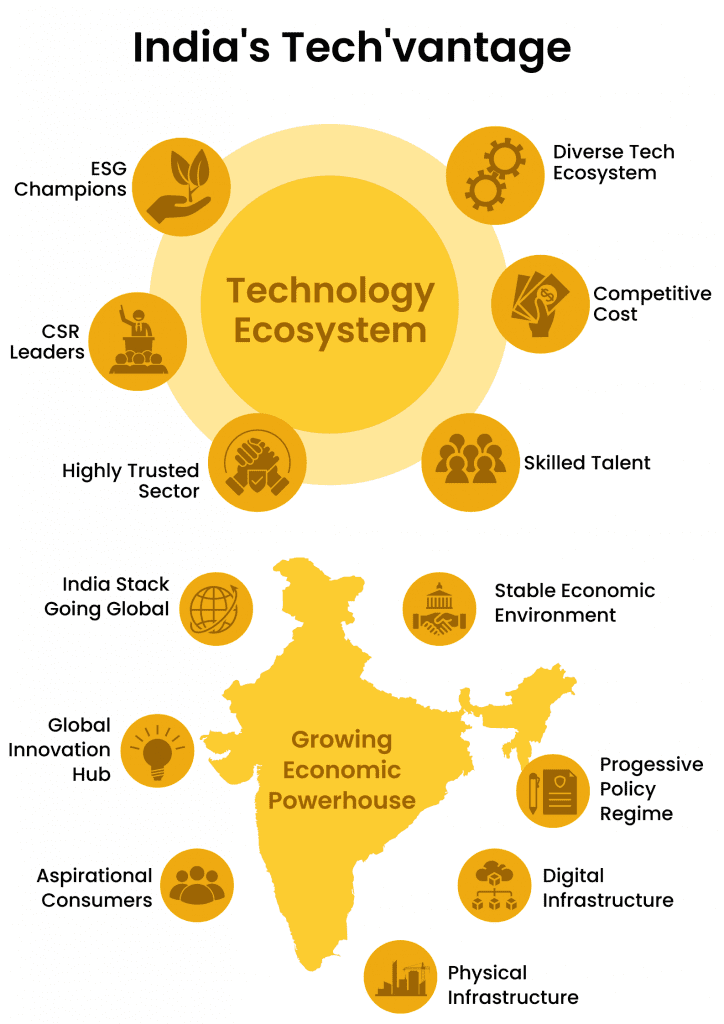
When businesses hire developers from India, they gain access to a large and varied technical talent pool. This matters because not every project needs the same kind of engineer. Some businesses need backend expertise, some need mobile specialists, and others need support across cloud infrastructure, QA, DevOps, or AI-enabled development.
India has become especially attractive because it offers this range at scale. Developers in India work across:
- Custom software development
- SaaS product engineering
- Web and mobile app development
- QA and automation testing
- DevOps and cloud support
- Backend systems and APIs
- Data workflows and AI integration
In short, you can find relevant skills when you need to hire an engineering team, including project managers, software engineers, full-stack development professionals, back end developers, with dedicated HR and payroll support to check on administrative tasks.
This makes India a practical hiring destination for companies that want both flexibility and capability.
|
Why does this matter in 2026? India’s strength is backed by broader market growth. According to IMARC Group, the Indian IT outsourcing market reached USD 55.8 billion in 2025. At the same time, Grand View Research expects the Indian software market to grow at a 18.8% CAGR from 2025 to 2030, while Statista projects India’s AI market to reach USD 7.84 billion in 2025. |
These numbers show that businesses hiring Indian programmers are not entering a stagnant market. They are entering one that is expanding across software, outsourcing, and AI-led delivery.
2. Working with Indian Developers is Cost-Effective
One of the biggest reasons businesses outsource coding to India is cost efficiency. But the advantage is not just that rates are lower. The real benefit is that companies can increase engineering capacity without increasing fixed costs at the same pace while gaining access to a vast talent pool.
That means the same budget can often support more development hours, broader role coverage, and better delivery continuity than an equivalent local hiring strategy. This is especially valuable for startups trying to hire employees and extend runway, mid-sized companies improving product velocity, and enterprises expanding delivery without overloading internal teams.
This is why cost-effectiveness remains one of the strongest benefits of hiring remote developers from India. It is not about reducing quality. It is about improving the value of every development dollar spent on complex systems.
3. India’s Outsourcing Ecosystem Continues to Strengthen
Over time, India has built a mature outsourcing ecosystem that supports both project-based execution and long-term offshore delivery. It is no longer just a place where companies outsource isolated tasks. It is a market where businesses build lasting engineering partnerships.
According to IMARC Group, the global IT outsourcing market reached USD 622.8 billion in 2025, which shows that outsourcing remains a major business growth strategy worldwide. India’s position within that market continues to be strong because it combines technical talent, delivery maturity, and business flexibility in one place.
4. Different Time-Zone Productivity Advantages
One major advantage of hiring remote software developers from India is the time-zone difference. Many businesses initially assume that this creates friction. In practice, it often improves delivery.
For companies in the US, UK, Europe, and Australia, Indian developers can continue working after local teams sign off for the day. That makes it easier to maintain progress across coding, testing, fixes, support tasks, and documentation.
When managed properly, this creates a productive overlap-plus-handoff model. Instead of waiting for the next business day to restart momentum, teams can keep projects moving with fewer idle gaps.
5. Minimal Communication Barriers
Strong communication remains one of the most important success factors in offshore delivery. Indian developers working with global clients are generally experienced in remote collaboration, sprint planning, async communication, documentation, and milestone-based reporting.
This is one reason why hiring Indian developers works well for distributed teams. Businesses are not simply buying technical skills. They are often working with professionals who are already used to cross-border collaboration, client communication, and structured delivery environments.
6. Address Talent Shortage Gaps With Ease
The global shortage of skilled developers continues to affect companies across industries. This makes it difficult for many businesses to hire quickly enough to match their product roadmap.
Hiring programmers from India helps close those talent gaps more efficiently. Instead of pausing growth or overloading internal teams, companies can add engineering support in areas where they are understaffed. This is especially useful when businesses need:
- Faster project ramp-up
- Specialized technical expertise
- Extra support during product growth
- More delivery bandwidth without long recruitment delays
7. Take Advantage of Flexible Hiring Models
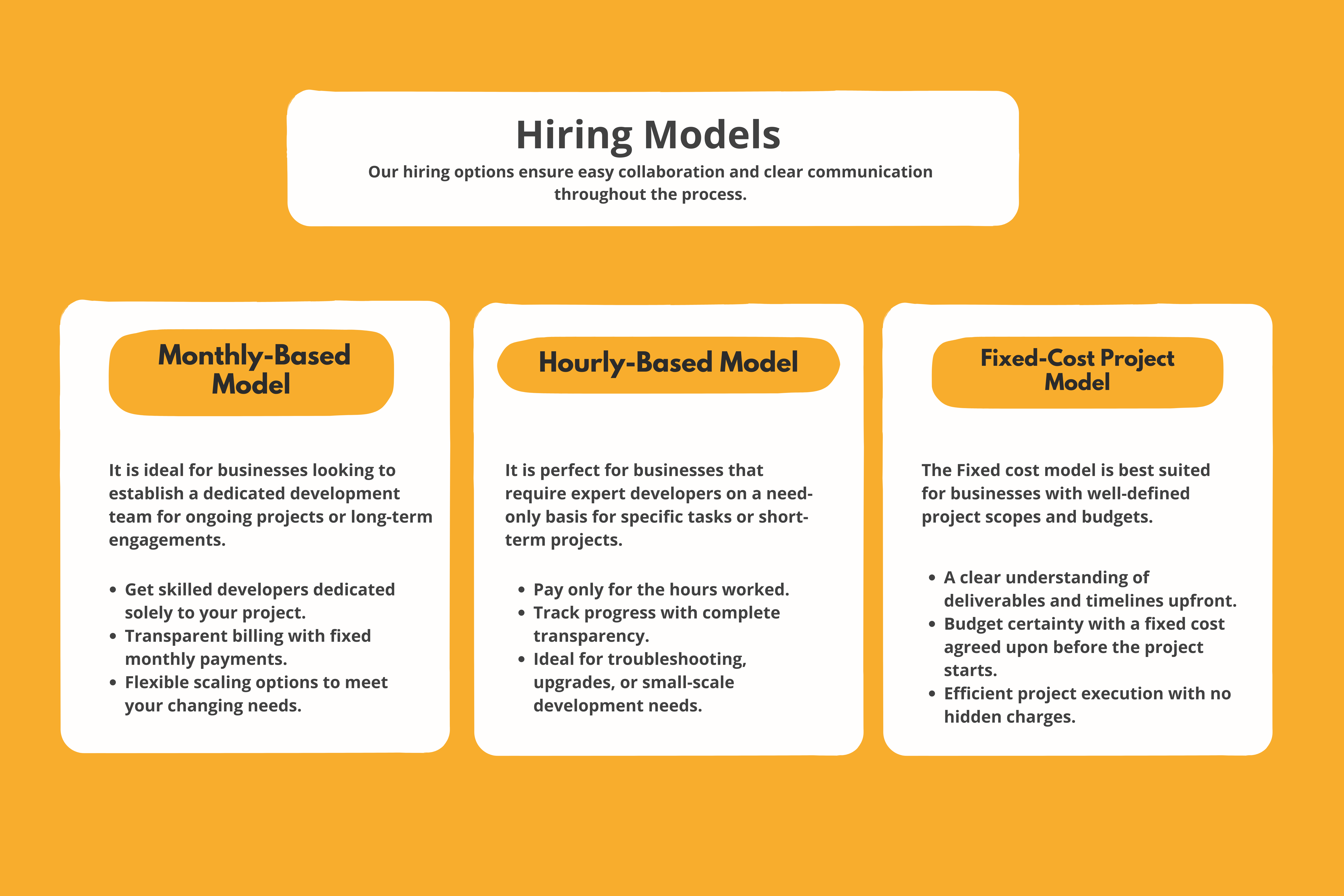
Indian offshoring companies and development partners usually offer flexible engagement models. This allows businesses to choose a structure that fits their goals, timeline, and internal operating style.
Common options include:
- Dedicated development teams for long-term product work
- Fixed-cost project outsourcing for defined deliverables
- Staff augmentation for immediate skill gaps
- Hourly or milestone-based support for short-term needs
This flexibility helps businesses control budget, scale teams gradually, and choose the level of ownership and involvement that suits them best.
8. Collaborate With Reliable Offshoring Companies
India is home to many experienced offshoring companies that support global businesses with established delivery processes, transparent communication, and scalable engineering support.
For companies that want more than freelance execution, this matters a lot. A strong partner establish clear communication protocols while bringing process maturity, quality control, and operational stability. If your business is considering a longer-term model, a dedicated development team can provide stronger continuity and team alignment.
9. Focus on Quality as Well as Cost
The best outsourcing decisions are not made on pricing alone. Businesses choose India because they can find teams that offer a practical combination of cost efficiency, technical ability, delivery discipline, and long-term partnership potential.
Indian developers are often selected for projects where businesses need speed, adaptability, and consistent engineering support. Whether the requirement is a product build, a cloud migration, QA automation, or ongoing software maintenance, companies increasingly see India as a place to build dependable delivery capacity, not just reduce spend.
What Tech Projects Do Companies Commonly Outsource to India?
One important content gap in the original version was the lack of service clarity. Businesses often want to know exactly what kinds of work are commonly outsourced to India.
Commonly Outsourced Tech Services
|
Project type |
Why Companies outsource it |
|
Custom software development |
To build platforms faster without overloading internal teams |
|
Web development |
To launch or improve digital products efficiently |
|
Mobile app development |
To access Android, iOS, and cross-platform expertise |
|
SaaS product engineering |
To improve roadmap velocity |
|
QA and test automation |
To strengthen the release quality |
|
DevOps and cloud support |
To improve deployment and infrastructure workflows |
|
AI integration and data workflows |
To add intelligence and automation to products |
|
Maintenance and support |
To ensure post-launch stability and updates |
Why Businesses Prefer India Over Other Outsourcing Destinations?
India remains one of the most preferred outsourcing destinations because it combines several advantages at once:
- A large and scalable developer workforce
- Strong experience working with global clients
- Flexible hiring and engagement models
- Better budget efficiency than many high-cost markets
- Delivery maturity across modern software and cloud work
- Growing relevance in AI-enabled development
For most businesses, it is this combination that makes India stand out, not any single factor on its own.
How to Outsource to India Without Quality Risks?
Another important content gap was buyer reassurance. Businesses considering outsourcing usually want to know how to avoid the common mistakes.
What to Check Before Choosing a Partner
- Review relevant case studies, not just generic portfolios
- Confirm experience in your exact tech stack
- Ask how reporting, sprint planning, and escalations are handled
- Clarify code ownership, IP protection, and confidentiality terms
- Check how easily the team can scale if needs change
- Start with a pilot, discovery sprint, or small initial phase
Businesses that choose partners based on process maturity and delivery fit usually get better outcomes than those choosing on rate alone.
How to Choose the Right Outsourcing Partner in India?
The right outsourcing partner should bring more than technical resumes. They should also demonstrate clear communication, project visibility, quality assurance discipline, and the ability to adapt as your product or business grows.
Questions to Ask Before You Decide
- Have they worked on similar projects or business models?
- Can they show measurable delivery outcomes?
- How do they handle onboarding and team expansion?
- What hiring models do they offer?
- How do they manage quality assurance and issue resolution?
- Can they support long-term scaling if needed?
Working with Indian developers can be structured in different ways based on the kind of support your business needs.
Hiring Model Comparison
|
Model |
Best for |
Main advantage |
|
Project outsourcing |
Fixed-scope work |
Faster setup and predictable delivery |
|
Dedicated offshore team |
Ongoing development |
Better continuity and stronger team integration |
|
Staff augmentation |
Immediate skill gaps |
Quick access to specialized talent |
Outsourcing is usually best for projects with a defined scope. Offshore development is better when you want a team that works like an extension of your in-house function. Staff augmentation works well when your existing team simply needs more capacity.
If you are planning your next hire, read: A Complete Guide to Hire a Programmer
Your Team in India’s Flexible Hiring Models Serve the Purpose
At Your Team in India, businesses can choose a hiring model based on project scope, timeline, budget, and long-term delivery goals. Whether you need short-term support, a dedicated offshore team, or a flexible engagement structure, the right model can simplify collaboration and improve delivery outcomes.
To understand the process better, visit: How it works
Bottom Line
India remains a leading destination for businesses looking to outsource tech projects in 2026. The reason is clear: when companies hire developers in India, they gain access to skilled professionals, cost-efficient delivery, flexible scaling, and stronger support for modern distributed work.
More importantly, businesses are no longer outsourcing to India only to save money. They are doing it to build faster, operate more efficiently, and create long-term engineering capacity with less hiring friction.
If you want to take advantage of these benefits for your business, Your Team in India can help you hire a dedicated team or developers with specialized skills for a specific project.

By Mangesh Gothankar


By Ashwani Sharma
By Achin Verma
Frequently Asked Questions (FAQs)









 4.8 out of 5 by