The mobile app development market is growing at an excellent pace.
The mobile app development market is still expanding, but growing more competitive. Users have more choices, higher expectations, and less patience for poor experiences. That means app success now depends on execution just as much as innovation.
To set the context, here are a few current market signals worth paying attention to:
|
Market signal |
Latest figure |
Source |
|
Worldwide application development software revenue, 2025 |
US$195.77 billion |
Statista Market Insights, 2025 |
|
Global mobile in-app purchase revenue, 2025 |
US$167 billion |
Sensor Tower, State of Mobile 2026 |
|
Global app downloads, 2025 |
Nearly 150 billion |
Sensor Tower, State of Mobile 2026 |
|
Global mobile application security market, 2025 |
US$2.68 billion |
Grand View Research, 2025 |
These numbers show two things clearly. First, the opportunity is real. Second, the market is mature enough that users reward apps that deliver clear value, smooth performance, and trustworthy experiences.
Within this landscape, Indian mobile app developers continue to be recognized for their technical capability, product thinking, and cost-effective execution. But even with the right development support, mobile app success does not happen by accident. It requires a roadmap that covers strategy, design, engineering, testing, launch, and continuous improvement.
This guide brings together the best practices that matter most if you want to build a mobile app that connects with users and performs well in the market.
What Makes a Mobile App Successful Today?
A successful mobile app is useful, intuitive, secure, and reliable. It solves a clear problem, feels easy to use on the first try, and continues improving after launch.
That value looks different depending on the category. A healthcare app may win because it simplifies appointment booking and reminders. A retail app may succeed because it reduces checkout friction and personalizes recommendations. A logistics app may stand out because it offers real-time updates and offline access for teams in the field.
The common thread is not complexity; it is relevance. The more directly your app improves a user’s life or workflow, the more likely it is to earn adoption and retention.
Expert Tips for Successful Mobile App Development
A well-designed mobile app can provide a substantial competitive advantage in retaining users and meeting their needs. Here are the mobile app development tips you cannot afford to miss if you have a mobile app development idea in your head.
1. Define Your Objectives Clearly
Before you start developing a mobile app, it is important to define your goals clearly. Having a clear app idea is essential, as it forms the foundation of your development process. This is one of the most basic but crucial steps in custom mobile app development.
By defining what you want your app to achieve, you create a roadmap for the entire development process. It also helps ensure that the final product effectively meets users’ needs while supporting your business objectives.
A practical way to frame this is to answer four questions early: what problem the app solves, who it serves, what business outcome it supports, and how success will be measured within the first year.
2. Identify Your Target Audience
After you set clear goals for your app development, spend time analyzing the market. It is important to understand your target users and what they need.
To do so, you should conduct market research with your goals in mind.
Understanding your target audience at an early stage is crucial when developing a mobile application, as it lowers the risk of failure. When you conduct comprehensive research, you get closer to answering the most important question of all: Is there a meaningful need for this application?
According to CB Insights, the lack of market need remains one of the leading reasons new products fail. That is why audience research is not just a marketing exercise. It shapes product decisions, feature prioritization, and even platform selection.
Google Glass is often cited as an example of a product that struggled partly because market demand and user acceptance were not validated deeply enough. Although it was not a mobile app, it still illustrates the importance of understanding adoption barriers before scaling development.
To gather useful insights, look at demographic data, behavioral patterns, competitor reviews, survey responses, and in-app pain points in similar products. This research helps you create a mobile app that resonates with users rather than just entering the market with generic functionality.
3. Create Buyer Personas to Guide Your Development Process
Creating buyer personas is an essential step in the mobile app development process. A buyer persona is a semi-fictional profile that represents your ideal customer based on real data and user insights.
A strong buyer persona should go beyond age or location. It should explain what the user is trying to achieve, what frustrates them today, how comfortable they are with technology, and what kind of mobile experience they expect.
For example, if your app is meant for busy operations managers, they may value speed, real-time visibility, and offline access far more than advanced visuals or social features. A clear persona makes product decisions more grounded and reduces guesswork during design and development.
4. Choose the Right Platform
Selecting the appropriate platform is a key decision in mobile app development. The two primary platforms are iOS and Android, and each comes with its own development standards, testing expectations, and app store requirements.
For iOS, the primary development environment is Xcode. For Android, it is Android Studio. Because both ecosystems differ in device behavior, review guidelines, and audience composition, it is important to decide early where your first release should focus.
You can also choose cross-platform app development if you want a shared codebase across iOS and Android. That approach can work especially well for MVPs, startups, and businesses trying to accelerate time to market without maintaining two fully separate native builds.
The right choice should be driven by audience behavior, budget, timeline, and the complexity of the experience you want to deliver.
May need extra tuning for platform-specific polish
|
Approach |
Best for |
Main strength |
Main limitation |
|
Native |
Performance-heavy or device-specific apps |
Best platform-level optimization |
Higher development effort across platforms |
|
Cross-platform |
MVPs, startups, faster launches |
Shared codebase and faster release cycles |
May need extra tuning for platform-specific polish |
Related Read: A Clear Roadmap to Mobile App Development
5. Choose the Right Technologies and Development Tools
Choosing the right technologies and development tools is a critical decision in the mobile app development process.
The right choice depends on your application type, performance expectations, integration needs, scalability goals, and internal team capabilities. For iOS, Swift remains one of the strongest choices. For Android, Kotlin is widely preferred. For cross-platform app development, Flutter, React Native, and .NET MAUI are commonly considered depending on the use case.
What matters most is not choosing the trendiest stack. It is choosing the one that gives you a stable path for development, maintenance, and future enhancements.
6. Define the App’s Business Model and Revenue Streams
Defining your app’s business model and revenue streams is crucial for its long-term success.
You can choose from several models, including freemium, subscription-based, advertising-based, paid downloads, in-app purchases, or transaction-based monetization. If your app involves payments, that also means planning secure payment flows and a trustworthy checkout experience.
Each model has its pros and cons, and the right one depends on your app, target users, and business goals. A fitness app may thrive on subscriptions. A marketplace app may work better with transaction fees. A B2B app may tie revenue back to a larger SaaS offering.
A clear business model helps align product decisions with commercial outcomes from the beginning.
7. Focus on Simplicity in User Interface
When planning to build a mobile app, simplicity can be one of the biggest advantages you have in a crowded market.
A mobile app prototype should make navigation easier for users. People should be able to understand what to do without feeling overwhelmed or needing lengthy instructions.
Instagram is often referenced as an example of simplicity done well. Its early appeal came from making photo sharing easy and fast instead of introducing too many features at once.
That is the lesson worth keeping: simplify the interface, reduce friction, and make primary actions obvious.
8. Balance Usability and Visual Appeal
Your user experience highly depends on the mobile application’s design and development.
That is why it is essential to find a balance between functionality and visual appeal. Good visual design creates confidence and clarity, but it should never come at the expense of usability.
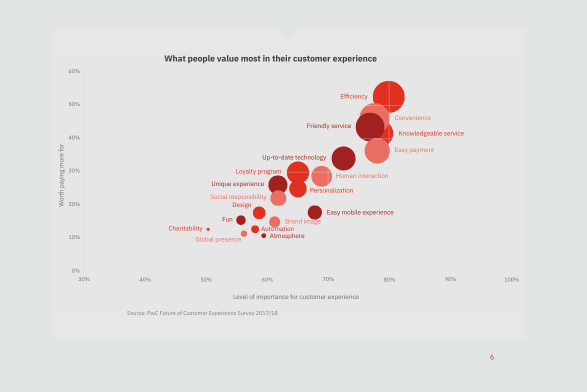
According to PwC research, customers often stop engaging with brands after repeated poor experiences. In mobile apps, this usually means confusing flows, weak visual hierarchy, slow performance, or friction during basic tasks.
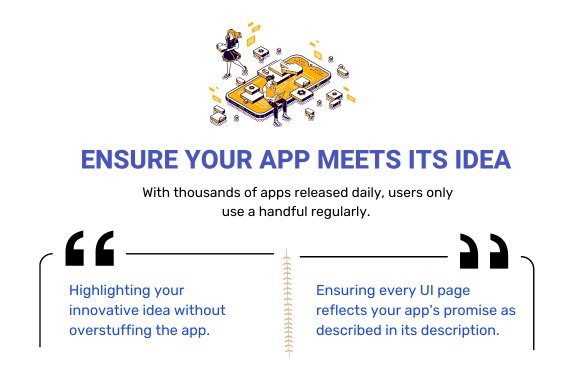
Before launching the application, focus on the most important features and design the experience so that it remains clear, scalable, and easy to use as the product grows.
9. Build a Minimum Viable Product
If you want your app idea to succeed, start the development process by building a minimum viable product, or MVP.
An MVP is a simplified version of your app with only the essential features needed to validate the core concept. It helps you understand whether users want the app and whether the core value proposition is strong enough to justify further investment.
If the core experience appeals to users, you can expand with more confidence. If not, you can revise the direction before spending heavily on a full-scale build.
For example, a doctor appointment app does not need every advanced feature in version one. Sign-up, doctor search, appointment booking, reminders, and basic profiles may be enough to validate demand.
10. Assemble a Team with Diverse Skill Sets and Expertise
A successful mobile app development project depends on assembling a team with diverse skills and expertise.
A balanced and dedicated development team usually includes developers, designers, project managers, and quality assurance engineers. Depending on the product, you may also need backend specialists, DevOps support, analytics expertise, and security input.
This matters because strong apps are not built through coding alone. They are built through coordination between user experience, technical architecture, delivery discipline, and product thinking.
11. Optimize Your App for Performance and Speed
While mobile app development is often discussed in terms of features and design, performance is itself a product feature.
A slow-loading app can frustrate users, reduce engagement, increase uninstall rates, and hurt ratings. That is why performance should be considered from the first build, not as a late-stage fix.
Focus on efficient architecture, clean coding practices, effective caching, optimized media assets, controlled background activity, and regular testing across real devices. Monitoring live performance after launch is just as important because real-world conditions often reveal bottlenecks that staging environments miss.
12. Offer Genuine Value to Customers and Users
Providing real value to your customers can lead to a successful mobile app.
Your mobile app should solve a specific problem or meet a particular need in a meaningful way. That is why you must clearly explain what makes your app valuable and reflect that value throughout the product experience, not just the marketing.
Value may come through convenience, speed, better visibility, personalization, exclusive content, or easier access to services. When users clearly feel that value, they are more likely to stay engaged and recommend the app to others.
13. Integrate New Technologies Thoughtfully
Using new technologies can improve your mobile app’s functionality and user engagement, but only when they create practical value for the user.
In today’s market, AI-led experiences, low-latency interactions, real-time analytics, and broader device adaptability are more relevant than generic trend-following. The most useful question is not whether a technology is popular. It is whether it improves the experience in a measurable way.
A logistics app may benefit more from live tracking, smart alerts, and offline sync than from augmented reality. A retail app may benefit more from AI recommendations and personalized search than from unnecessary experimental features.
Recommended Read: Factors to Consider While Hiring a Mobile App Developer
14. Enable Offline Functionality
Reliable internet is not always available. So, users want mobile apps that work even without a steady connection.
Offline support becomes especially important in travel, field operations, healthcare, learning, and logistics. If users can still access essential content or complete important actions without perfect connectivity, the app becomes far more dependable.
A good offline strategy usually combines local storage, cached content, and sync-on-reconnect behavior. That way, the app remains useful even when the connection is not.
15. Plan a Go-To-Market Strategy
Your mobile app development does not end with successful development. A well-prepared go-to-market strategy is an important part of the mobile app development process.
A good launch strategy should clearly define the app’s value proposition, audience segments, onboarding experience, app store assets, and promotion channels. It should also prepare for early feedback, reviews, support questions, and the first round of post-launch updates.
Apps that launch without a clear go-to-market plan often struggle to gain visibility even when the product itself is solid.
16. Gather Feedback and Plan Updates Regularly
Once you have tested the first iteration of your mobile application with real users, it is time to gather feedback.
This information is crucial for improving the app and creating a better user experience. Mobile app development also requires regular updates. That means more than fixing bugs. It means observing how users behave, identifying friction points, improving weak flows, and responding to demand with better product decisions.
App reviews, support interactions, in-app surveys, interviews, and analytics dashboards all help shape a stronger release roadmap.
17. Ensure Cross-Platform Compatibility
A successful mobile app must deliver a seamless experience across devices and platforms.
To achieve this, test your app across different devices, screen sizes, and operating system versions. Responsive layouts, adaptive UI decisions, and broader device coverage all help reduce usability issues and increase satisfaction.
This is becoming even more important as apps are expected to work well across standard smartphones, larger devices, and in some cases, foldables or wearable-connected ecosystems.
18. Optimize for App Store Success
App Store Optimization plays a vital role in app visibility and user acquisition.
Strong ASO is not just about adding keywords. It is about making the app easy to understand, easy to trust, and easy to convert from a store listing to an install. That means your title, description, screenshots, visuals, and metadata should accurately reflect the product and clearly communicate value.
Ratings, reviews, privacy clarity, and regular listing updates also influence how your app performs over time in both the Apple App Store and the Google Play environments.
Security and Privacy by Design
Security and privacy should be built into the app from the beginning, not added at the end. This matters even more now because the business risk around weak mobile security is growing.
Grand View Research values the global mobile application security market at US$2.68 billion in 2025, which reflects how seriously businesses are taking secure mobile experiences. The reason is simple: users expect apps to protect sensitive information, and platforms increasingly expect developers to justify permissions, disclose data practices, and maintain trustworthy experiences.
From a development standpoint, security by design means thinking early about authentication, session handling, encrypted data transfer, secure storage, backend protection, and API exposure. Privacy by design means requesting only the permissions you actually need, writing clear privacy policies, and being transparent about how data is collected, stored, shared, and deleted.
A fintech or telehealth app is an obvious example, but the principle applies widely. Even a retail or productivity app can lose user trust quickly if privacy practices feel excessive or unclear.
Accessibility and Inclusive UX
Accessibility is not just a compliance layer. It is a product quality layer.
An accessible mobile app is easier to use for everyone, including people with visual, motor, cognitive, or situational challenges. In practice, that means paying attention to text size, contrast, tap target size, screen reader compatibility, motion sensitivity, and alternatives to gesture-only actions.
This is one of the easiest ways to improve usability while also broadening your audience. An app with better contrast, clearer labels, and more forgiving controls does not only helps assistive technology users. It also helps older users, distracted users, and people using the app in real-world conditions like bright sunlight or one-handed use.
Rather than treating accessibility as a final checklist item, it should be part of design reviews and QA from the start.
Mobile App Development Trends That Matter in 2026
Not every trend deserves implementation, but some are clearly shaping how businesses think about mobile apps in 2026.
Sensor Tower’s State of Mobile 2026 shows that 2025 global in-app purchase revenue reached US$167 billion and downloads climbed to nearly 150 billion, while AI continued to change how users engage with apps. That points to a mobile market where competition is no longer just about getting installed. It is about getting used to, trusting, and monetizing effectively.
The most meaningful trends are not simply flashy features. They are product directions that improve usability, engagement, and lifetime value. AI-powered personalization, in-app assistants, smarter search, predictive recommendations, real-time analytics, and low-latency experiences all fall into that category. Support for broader device environments, including foldables and wearable-linked interactions, is also becoming more relevant in certain use cases.
The right response to trends is selective adoption. Businesses should implement the ones that improve business outcomes or user experience in a concrete way, not the ones that only make the product deck sound modern.
Mobile App Development Pre-Launch Review
Before launch, it helps to review the app as a product, not just a build. The table below is a practical way to do that.
|
Area |
What to confirm before launch |
|
Core journeys |
Primary actions work smoothly from start to finish |
|
Performance |
Load times, crash behavior, and responsiveness are acceptable on real devices |
|
Compatibility |
The app works well across supported OS versions and screen sizes |
|
Security |
Sensitive data flows, permissions, and session handling have been reviewed |
|
Privacy |
Legal pages, consent flows, and disclosures are complete and accessible |
|
Accessibility |
Text, contrast, navigation, and interaction basics have been tested |
|
App stores |
Screenshots, descriptions, categories, and metadata are accurate |
|
Analytics |
Event tracking, crash monitoring, and post-launch measurement are configured |
|
Support |
Contact paths, help flows, and feedback channels are visible |
|
Release plan |
The first post-launch update roadmap is already defined |
Bottom Line
Creating a successful app is no longer just about coding and launch. It takes a collaborative effort across strategy, design, development, testing, security, store optimization, and post-launch improvement to turn an idea into a product that people genuinely want to use.
If you have a promising idea but do not have mobile development skills or an in-house team to execute it, it helps to work with a reliable mobile app development company that can support the journey from concept to launch and beyond.
"Your Team" in India can be your go-to partner to assemble a team of skilled professionals in mobile app development. Get in touch to discuss your mobile app idea.
Frequently Asked Questions

The most important tips are defining clear goals, understanding your audience, building an MVP, optimizing performance, designing for accessibility, prioritizing security and privacy, and planning for post-launch updates. These are the foundations that influence both product quality and long-term retention.
It depends on your goals. Native apps are ideal for high-performance and platform-specific experiences. Cross-platform apps are often better for faster launch timelines, broader reach, and more efficient early-stage development.
Mobile apps often handle personal, financial, location-based, or business-critical data. Strong security protects users, reduces business risk, supports compliance, and helps maintain trust in the product.
An MVP should include only the core features needed to validate the app’s main value proposition. It should solve one important problem clearly, rather than trying to cover every possible use case in version one.
App store visibility improves when your listing is clear, accurate, and conversion-friendly. Titles, descriptions, screenshots, reviews, and onboarding quality all play a role, along with regular updates and strong product-market fit.
Accessibility helps more users successfully interact with your app and usually improves usability for everyone else as well. It supports clarity, reach, and overall product quality.








 4.8 out of 5 by