Most app development ideas never leave the Google Doc they were typed into. The concept is usually fine. Six months pass, nobody validates anything, and the window closes.
The market shifted underneath. As per recent research, the app store recorded around 142.2 billion downloads in 2025, up just 0.8%, while app spending rose 10.6% to $167 billion. Installs have stalled, and revenue keeps climbing. Generative AI apps pulled 3.8 billion of those downloads on their own.
Getting onto someone's home screen now takes an app that solves one core problem exceptionally well for a narrow group of users, not a general-purpose tool that does eight things adequately.
Below are 55 mobile app ideas for 2026, sorted by industry. Some of the AI app ideas here need real model work behind them. Validate demand with a landing page before you commit budget, then hire mobile app developers who have shipped in your category.
55+ Trending Niche App Ideas for 2026
Business and Entrepreneurship Mobile Applications
1. AI-Powered Market Trend Forecaster App
Traditional methods of doing market research and analysis often fall short due to human biases and limited scope. AI fuels this market trend forecasting by quickly analyzing large amounts of data, such as social media posts, news articles, and historical records. It uses machine learning to examine this data and predict changes in consumer behavior, demand, and possible industry shifts.
McKinsey found 88% of organizations now use AI in at least one function, but close to two-thirds have not scaled it anywhere. The gap is the opportunity. Most companies have the data and no working system for reading it, which leaves room for a focused tool that does one thing accurately instead of a broad platform nobody adopts.
2. AI-Powered Customer Support Chatbot
In today's highly competitive market, businesses must utilize cutting-edge technologies to enhance customer engagement and drive revenue growth. Using an AI chatbot can help businesses generate more leads and provide better support. This is indeed one of the excellent mobile application ideas for businesses and marketers to enhance their work productivity and quality.
Only 23% of organizations have scaled agentic AI anywhere in their business, so this is still early enough to matter. Build for multilingual coverage from the start, and log every conversation the agent could not resolve. That log becomes your roadmap.
AI tools like LeadIQ and Apollo.io already apply similar logic to outbound, enriching contacts and personalizing sequences at volume. An app doing the same on the inbound side gives smaller teams a real competitive edge against companies with twenty support staff.
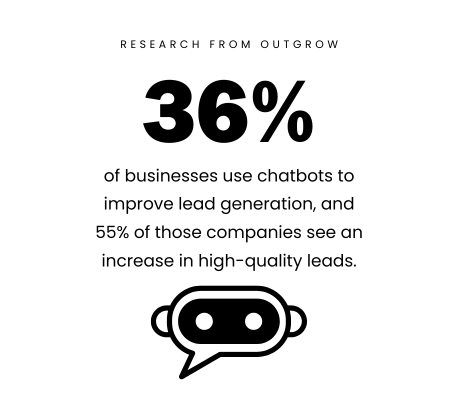
Source: Outgrow
3. Customer Feedback Intelligence App
Reviews, support tickets, survey responses, and app store comments pile up faster than anyone reads them. This app applies natural language processing to that pile and surfaces what people actually complain about, ranked by how often it appears and how much revenue sits behind it.
Pattern recognition across thousands of comments catches problems a manager scanning twenty reviews would miss. For small businesses without a research function, customer feedback stops being anecdotal and starts driving real decision-making about what to fix first.
Shopping & E-commerce Apps
4. Personalized Shopping App with AI Recommendations
McKinsey puts the revenue lift from personalization at 5% to 15% for most retailers, with marketing spend efficiency improving 10% to 30% alongside it. Amazon's recommendation engine reportedly drives around 35% of company sales, which is the number most often cited when a founder pitches this category.
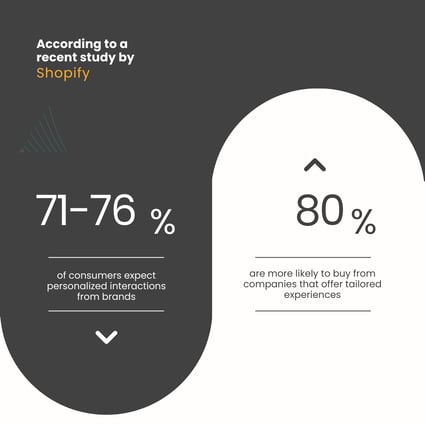
Using advanced Predictive Algorithms, AI can help customers make smart buying choices based on their browsing, preferences, and purchase history in real time. Amazon is one of the popular platforms that is already leveraging this AI-based personalized Shopping Agent.
With this mobile app development idea, businesses can:
-
Increase their revenue
-
Suggest similar products to shoppers
-
Remind customers of incomplete purchases
-
Analyze insights from dashboards
-
Offer attractive recommendations like related products, items frequently bought together, and discounts.
5. Fashion Stylist Application
A styling app catalogs what someone already owns, learns their preferences from what they wear rather than what they say, and assembles outfits for specific occasions. Shopping suggestions work better here than in a generic store because the app knows the wardrobe it is filling gaps in.
Computer vision handles wardrobe capture from photos, and AR try-on lets people see a piece on themselves before buying. Returns are the real business case. Apparel return rates sit high enough that even a modest reduction pays for the app.
Health & Wellness Application Ideas
6. Telemedicine App with AI Triage
Every telehealth platform does video calls. What separates them in 2026 is the fifteen minutes before the doctor joins. An AI layer walks the patient through symptom questions, pulls their history, checks current prescriptions for interactions, and hands the clinician a structured summary at the start of the call.
Keep your language around triage. The system narrows possibilities and routes people to the right level of care, while a licensed human makes the clinical call. Among healthcare app ideas, this one pays back quickly, since four minutes saved per consultation adds up across a busy practice.
7. Smart Nutrition and Ingredient Scanner
Nobody parses a label with fourteen ingredients while standing in a supermarket aisle. A scanner app reads the barcode and returns a plain verdict on additives, added sugar, and allergens, then points to a similar product that scores better.
Yuka already proved demand here at scale. What stays open is depth. An app built for one condition, say kidney disease or Crohn's, can give guidance a general-purpose scanner has no way to offer.
8. Personalized Sleep Coach App
The app reads sleep stages from a wearable and correlates them against caffeine timing, screen use, bedroom temperature, and training load. Then it tells the user which single variable is costing them the most rest.
Digital CBT-I carries the strongest clinical evidence in this space. Get that program right and the tracking layer turns into a supporting feature, which is roughly the opposite of how most sleep apps get built today.
9. Remote Patient Monitoring App
Connected cuffs, glucose monitors, and pulse oximeters stream readings to a clinician dashboard between appointments. Machine learning watches for drift in someone's baseline and fires real-time alerts when a chronic condition starts sliding, often days before the patient feels anything.
Reimbursement explains why the category keeps growing. Remote monitoring carries billing codes in the US, which gives hospitals a direct financial reason to adopt such apps.
10. Digital Health Record App
Patients still walk between specialists carrying paper folders. This app pulls everything into one encrypted place: prescriptions and imaging and lab results and visit notes, with the patient deciding who gets access and for how long.
Build on FHIR from day one. Interoperability rules in the US and EU mean a proprietary format will strand you, and hospital systems will not integrate with an app that cannot speak the standard.
11. AI Fitness Coach App
A coaching app reads recovery data, past sessions, and whatever equipment someone can actually reach, then writes the next workout. When a user sleeps badly or misses two days, the plan bends around it.
Form checking through phone camera analysis is the feature worth building. Most people quit because they cannot tell whether they are doing a movement correctly, and no amount of rep counting fixes that.
12. Menstrual Cycle Tracking App with Privacy-First Design
The app learns from logged cycles, symptoms, sleep quality, and stress to predict windows more accurately than calendar math manages, and it flags irregularities worth mentioning to a doctor.
Privacy decides who wins this category. Reproductive health data became legally sensitive across parts of the US, and users left apps that could not clearly say who holds their records. Process on device where possible and encrypt whatever has to sync. Put that in the app store listing, because people read the listing before they read a privacy policy.
Finance Applications
13. AI-Powered Financial Advisor
NVIDIA's 2026 State of AI in Financial Services report found 65% of firms actively using AI, a jump from 45% a year earlier, with 89% saying it lifted revenue while lowering costs. Agentic systems are moving fastest, with 42% of respondents using or assessing them.
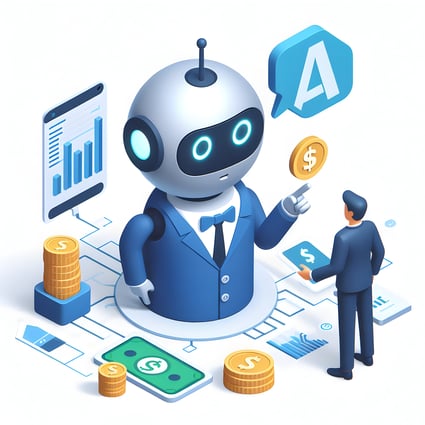
Mobile apps can be an essential part of technology and workflows within banking, insurance, and financial services. They can drastically change the way products and services are offered. For financial advisors, such mobile apps can use deep learning and prediction to improve decision-making and streamline operations.
These apps help financial advisors with daily tasks, such as serving clients, analyzing data, optimizing portfolios, assessing risks, and predicting trends. Major financial brands like Capital One, Morgan Stanley, and Wealthfront already use AI in different ways.
Integrating AI into mobile phone apps can provide even more benefits. To fully leverage this technology, it's important to connect with a reliable Fintech software development company.
14. AI Expense Tracker and Categorizer
Bank feeds arrive as cryptic merchant strings. The app parses them, assigns categories without the user training it first, and separates a genuine business expense from a personal one on a shared card.
Predictive analytics does the useful part. Knowing that a user's discretionary spending is tracking 20% above where it sat at the same point last month is more actionable than a pie chart of where the money went. Subscription detection alone justifies most installs, given how many people pay for services they stopped using.
Small businesses are the underserved segment here. Consumer budgeting apps are crowded, while a sole trader reconciling receipts for a quarterly return still mostly does it by hand.
15. AI Fraud Detection for Consumer Banking
Fraud detection topped NVIDIA's list of production AI use cases in financial services, which makes sense given it has a direct measurable payback.
Neural networks trained on transaction sequences catch patterns a rules engine misses, including account takeover attempts that look normal transaction by transaction and only appear suspicious as a sequence. The app pushes a real-time prompt to the user when something scores high, letting them confirm or block in one tap.
Reducing false positives is where the product wins. Customers abandon banks that decline legitimate cards at checkout, so precision matters more here than recall.
16. Agentic Payments and Bill Negotiation App
An agent watches recurring charges, spots the annual price increase on an insurance renewal, checks competitor pricing, and either negotiates the bill down or files the switch on the user's behalf.
The trust architecture decides whether this ships or dies. Spending limits, an approval step above a threshold, and a readable log of every action the agent took all belong in version one. People will hand an agent their bills long before they hand it their card.
Real Estate & Property Apps
17. Neighborhood Intelligence App
Buyers research a house in detail and the surrounding area barely at all. This app pulls crime statistics, school performance, transit access, planning applications, flood risk, and noise data into one view for any address someone is considering.
The AI layer summarizes what all of it means for a specific buyer. A family with young children and a commuting couple care about different variables in the same postcode, and the app should weight accordingly instead of showing everyone the same dashboard.
Planning applications are the underused signal. Knowing that a warehouse development was approved four streets away changes a purchase decision, and almost nobody checks before exchanging contracts.
18. Property Portfolio Tracker App
Landlords with more than three units usually run their business out of a spreadsheet and a shoebox of receipts. The app consolidates property values, rental income, mortgage costs, maintenance spend, and yield per unit into one place.
Predictive analytics adds the part a spreadsheet cannot do. Flagging that a property's yield has slipped below the portfolio average for two consecutive quarters gives an investor a reason to act while the option is still open.
Property managers running units for other people need a different view of the same data, with owner reporting and fee reconciliation on top. That segment pays more and churns less than individual landlords.
19. AI Property Management Assistant
Maintenance requests arrive at midnight as a blurry photo and the words "sink broken." An AI assistant triages the request, uses computer vision on the submitted photo to classify severity, checks whether it is an emergency under the tenancy agreement, and dispatches the right trade with an appointment window.
Tenant communication is where property managers lose their evenings. Handling routine questions about rent dates, parking, and lease renewals automatically frees the manager for the small number of situations that actually need judgment.
20. Student Housing App
Students hunting near a campus face thin listings, sketchy sublets, and roommate matching done through group chats. The app verifies landlords, maps distance to lecture buildings by walking time, and surfaces reviews from previous tenants at the same address.
Solve supply before you build features. Every housing marketplace fails on the landlord side first, and the practical route is one university at a time, starting with the letting agents who already hold student stock. Virtual tours and roommate matching matter once inventory exists and mean nothing before that.
21. AI Comparative Market Analysis Tool
Agents assemble CMA reports by hand from recent comparable sales, adjusting for condition, layout, and how long each property sat on the market. The app drafts the report and the agent edits it.
Budget properly for data access. MLS feeds require IDX or RESO Web API licensing negotiated with each MLS, usually with a participating broker sponsoring the application. Hundreds of separate MLSs operate across the US, and each has its own agreement, approval timeline, and display rules. In markets outside the US, you are working with land registry records and portal scraping, which carries its own terms-of-service exposure.
Position the output as a valuation estimate supporting an agent's judgment. Automated valuation models have drawn regulatory attention over appraisal bias, and a tool that presents a number as authoritative invites scrutiny; a tool that presents a range does not.
Education and Learning Apps
22. Language Tutor App
This innovative mobile app idea can make learning a new language easier and more personal. It's a language learning app that can provide personalized lessons, instant feedback on pronunciation, and interactive conversations powered by AI.
With this language learning app, users can practice speaking through virtual tutors that create realistic dialogue scenarios. This can help them learn more naturally. The app adjusts to each person's learning pace and offers a more tailored experience that improves fluency and understanding.
23. Exam Preparation App
Preparing a learning plan for the students before exams and ensuring that they cover every topic is a crucial task for parents and even teachers. This exam preparation mobile app idea can take away your worries about preparing those schedules.
An application that leverages AI can help students prepare efficiently for exams by providing structured study plans, personalized quizzes, and performance tracking.
Using adaptive learning technology, this app can identify weak areas and suggest targeted exercises to improve retention. It can also have embedded features like AI-powered flashcards, mock tests, and voice-based revision tools that ensure students stay on track and maximize their study efficiency.
24. Interactive Textbook App
This awesome app idea can change how students learn by replacing traditional textbooks with interactive digital versions.
Gone are the days when students had to cope with tedious textbooks with no images.
With the tech advancements and this app idea, students can watch videos, explore 3D models, take quizzes, and listen to explanations that make learning more fun. This could be one of the brilliant app ideas that can also help students understand key concepts quickly with AI-powered summaries and track their progress using smart analytics.
25. Personalized News Aggregator App
Our next mobile app idea is a news aggregator. This great mobile app uses AI to collect news articles based on what users like, how they read, and their browsing habits.
It can remove unrelated content and deliver personalized news feeds that help users stay updated on the topics that interest them most. The app also offers features like AI summaries, voice reading, and support for multiple languages.
In short, this app development concept can make the news-reading experience easier and more suitable for individual preferences.
Travel and Navigation Apps
26. AI Trip Planning App with Booking Execution
Itinerary generation stopped being a product in 2025. Anyone can ask a chatbot for four days in Lisbon and get something decent back, so an app that only produces a plan has no reason to exist.
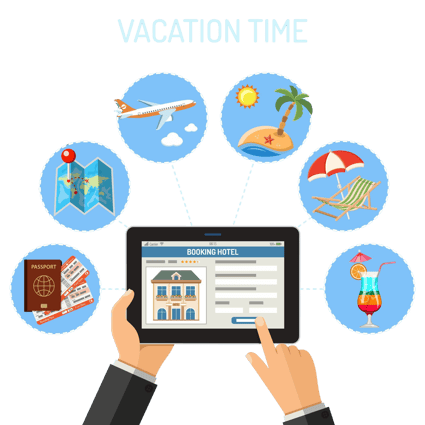
The gap sits in execution. Turning a plan into confirmed bookings across flights, accommodation, trains, and restaurant tables involves a dozen systems that do not talk to each other, and trip planning still collapses the moment one leg changes. An app that rebooks around a cancelled flight at 6am, checks whether the hotel can shift the arrival date, and tells the user what it did is solving a real problem.
Group travel is the second opening. Coordinating six people with different budgets and arrival dates is genuinely hard, and the current solution is a WhatsApp thread nobody can read.
27. Community Ride-Sharing App
Small towns and suburban corridors have no viable transport option between a car and nothing. An app matching people already driving the same route cuts cost for both sides and puts fewer cars on the road.
Insurance decides whether this launches. Personal auto policies often exclude compensated passenger transport, and crossing from cost-sharing into paid rides pulls you under TNC licensing in most jurisdictions. Keep contributions at documented fuel cost and get a written opinion from a local insurance broker before you write code.
Density beats features. Ten thousand users spread across a region produce no matches, while four hundred along one commuter corridor produce a working service, so launch narrow and expand along routes that already have traffic.
28. EV Charging Navigation App
The US market shifted underneath this category. Federal purchase credits ended in September 2025, quarterly EV sales dropped from 437,487 to 216,399 by Q1 2026, and Cox Automotive expects the full year to land above a million units while still running negative against the prior year. Growth continues in China and Europe.
Station count is no longer the problem. Roughly 247,000 public ports operate across about 80,000 US locations. Reliability is the complaint drivers actually have, since arriving at a broken charger with 8% remaining is the experience that turns people off electric cars.
Build around live status and crowdsourced reports of what worked last week. Route optimization should account for battery state, elevation, weather, cabin load, and charger uptime history, then present a plan the driver can trust. Payment fragmentation across networks is the other pain point worth solving in one wallet.
29. Public Transit App with Real-Time Updates
Google Maps covers transit adequately in large cities and poorly everywhere else. Mid-sized networks, regional operators, and rural services frequently have no usable digital layer at all.
Start with GTFS and GTFS-Realtime. Most agencies publish these feeds already, and the ones that do not are often willing to work with a developer who offers to help them get compliant. That relationship becomes your moat, since a competitor cannot copy an agency partnership.
Differentiate on the details riders care about and Google ignores, including which carriage is least crowded, whether the lift at the interchange is working, and how long the actual walk between platforms takes.
30. Travel Community App
Travelers ask the same questions in Reddit threads and Facebook groups that nobody indexes well. A dedicated app collects destination advice, verified local guides, and trip reports from people who went recently.
Cold start is the whole challenge here. A community app with thin content has no reason for a second visit, so seed it around one traveler type first, whether that is long-distance cyclists or families with toddlers or solo women. Narrow communities reach useful density at a few thousand members. General ones need millions.
Food and Beverage Apps
31. Food Ordering App
Delivery marketplaces take 15% to 30% per order and keep the customer relationship. This app gives independent restaurants their own ordering channel with menus, dietary filters, order tracking, and a customer list they own.
The app suggests meals from past orders, health goals, and local trends. Voice assistants handle the phone orders that still arrive mid-service when nobody has a free hand.
Key features:
-
Multiple payment options including digital wallets, with loyalty programs to retain customers
-
Integration with major delivery services or in-house driver systems
-
AI-driven recommendations based on order history and trending deals
-
Exclusive local deals negotiated directly with restaurants and food trucks
32. Food Donation App
Restaurants, grocery stores, and individuals list surplus food. Charities, food banks, and volunteers claim it and distribute.
Liability fear is what stops most venues from donating. The Bill Emerson Good Samaritan Food Donation Act protects good-faith donors in the US, with equivalents elsewhere, and surfacing that during onboarding converts more venues than any feature.
AI predicts demand hotspots and handles route optimization across multiple pickups. Automated pickup requests, impact tracking, and donation incentives keep participation going.
33. Recipe Generator
The user photographs the fridge and cupboard. Computer vision identifies what is there, and the app returns meals built from those ingredients, adjusted for dietary preferences and available time.
Portion scaling, ingredient substitutions, and a link to grocery delivery for missing items round it out. Substitution is the feature people stay for, since knowing yogurt covers for buttermilk saves a trip to the shop.
Grocery Applications
34. Smart Grocery List and In-Store Navigator
Shoppers backtrack across a store because their list is ordered by when they thought of things. This app sorts the list by aisle for the specific branch they are standing in, using crowdsourced store layouts that improve as more people shop.
It flags which items are on promotion that week and warns when something on the list is usually out of stock at that location. Users save time on every trip, which is the same problem contactless checkout was trying to solve through a route you cannot access.
35. Grocery Organic & Natural Food Finder App
As more people opt for healthier lifestyles, finding organic and natural food options nearby can be challenging. This cool app idea can help users discover stores and brands that offer organic, non-GMO, and natural food products in their vicinity.
It can also provide product details, certifications, user reviews, and even recommendations based on dietary preferences.
36. Kitchen Inventory and Expiry Tracker
Receipt scanning populates the pantry automatically after a shop, so the user never manually enters anything. The app tracks expiry dates from purchase and builds the grocery list as items run low.
Most household food waste is stuff that expired unnoticed at the back of a shelf. A notification two days before expiry, paired with a recipe using that exact item, addresses it directly. Same outcome the smart fridge idea wanted, built on data you can actually get.
37. Grocery Price Comparison App
Prices for groceries often vary across different stores. This makes it difficult for shoppers to find the best deals. A grocery price comparison app idea can allow users to scan items and compare prices across multiple retailers in real-time.
Users can also earn cashback rewards on their purchases, access special discounts, and get alerts for price drops.
38. Grocery Delivery App
Imagine a mobile app that changes how we shop for groceries. This app idea can allow users to order products for quick delivery or choose a time for pickup. It helps busy individuals and families shop for groceries from the comfort of their homes.
Being one of the best app ideas, the key features of the application concept may include many payment options, personalized recommendations, and more. Users can benefit from loyalty rewards and customized discounts based on their shopping habits. The app connects with major grocery stores and meal kit services to ensure that customers access fresh products and recipes.
What makes this app special is its partnership with local farmers and food producers. This means users can find exclusive deals on fresh, locally sourced ingredients. It can also suggest meal ideas based on user preferences, making grocery shopping enjoyable and easy.
Social & Communication Apps
39. Virtual Reality Social Network Application
Imagine a social network where users can meet and interact in a virtual world. This app idea can take social networking by immersing users in an interactive experience through virtual reality.
With this social networking app, users can create avatars, explore virtual spaces, attend live events, and communicate in real-time.
Whether hosting virtual meetups, playing games together, or attending concerts from anywhere, this social networking app can change how we connect and engage online.
40. AI-Powered Chatbot for Social Media Management
Managing social media can be time-consuming. But an AI-powered chatbot app idea can make it seamless. This app idea allows businesses to automate replies, schedule posts, analyze engagement, and offer instant support on different platforms.
With AI analytics, it can improve content strategies, increase user interaction, and ensure support 24/7. It’s ideal for brands that want to strengthen their digital presence while saving their time and effort.
Entertainment & Gaming Apps
41. AI Playlist and Music Discovery App
Build this on top of Spotify or Apple Music rather than as a streaming service. Direct licensing from the three majors carries minimum guarantees most startups cannot fund, while their APIs let you handle discovery and curation with playback staying on their licence.
The app reads mood, activity, heart rate from a wearable, time of day, and listening history to assemble playlists that fit the moment. Spotify already ships AI DJ, so the opening is depth in places the big platforms treat generically, whether that is running cadence matching, focus work, or sleep.
Voice assistants and smart speaker support extend it past the phone, which is where most listening actually happens.
42. AR-Based Mobile Games
Location-based AR has a harder track record than most listicles admit. Niantic sold its games division to Scopely for $3.5 billion in March 2025, and Sensor Tower put Pokémon GO's 2024 in-app purchase revenue above $520 million while the next best title in the portfolio managed $86 million. One franchise carried an entire category.
Analysts point to the reason. AR and location games cost a great deal to develop and demand constant content updates, and the ones that work usually lean on IP people already love.
The realistic scope for a new entrant is narrow and local. AR walking tours for a specific city, museum companions, escape games built around one neighborhood, or training tools that overlay instructions on physical equipment. Small footprint, real budget, actual users.
43. AI Video Editing App
Automatic scene detection, smart trimming, voice-to-text captions, background noise removal, and generative AI tools for b-roll and reframing. Non-technical creators produce watchable video without learning a timeline.
CapCut owns the general market, so pick a vertical. Estate agents shooting property walkthroughs, restaurants filming daily specials, and coaches clipping session footage all need video, and none of them want to learn editing. A tool that outputs the exact format one industry uses beats a general editor for those users.
44. Karaoke and Social Singing App
Licensing decides this one. Karaoke tracks need mechanical licences for the composition and synchronization rights for lyric display, plus recordings of the backing tracks. Smule runs on direct deals with major labels. The workable route for a smaller team is a licensed catalog provider, which caps the library but makes launch possible.
Skip the celebrity likeness filters. Making users resemble a named artist runs into right-of-publicity claims, and general vocal effects and visual styling get you the same fun without the exposure.
Partnerships with local bars and music venues give the app a physical presence and a promotion channel most competitors do not have.
Home and Garden Apps
45. Home Maintenance App
Home maintenance can be complicated, especially in metro cities where finding reliable services is challenging.
Having a home maintenance application can be one of the best app ideas that can simplify the entire process. This mobile app concept can provide users with tools that can track repairs, receive timely reminders for due maintenance, and schedule maintenance tasks for them!
It can also connect you with local home maintenance and repair companies that offer exclusive deals on services. With an intuitive dashboard and AI-powered recommendations, this app helps you access the services you need without any hassle.
46. Interior Design App
Everybody loves a place with aesthetically pleasing interiors, especially when it's your home or office space. An interior design app can be a perfect app development idea that can be the real escape for people looking to redesign or redecorate their home and office space.
This virtual interior designer app can offer a wide range of interior design tools and templates that may even include the 3D view feature to visualize the changes.
By leveraging advanced technologies like 3D visualizations, AR/VR, and AI, users can try and test how different elements will look in their spaces before actually moving forward with the renovations.
It can also provide a library access to inspirations and design ideas. Users can also connect with professionals in real time for personalized advice.
47. Gardening App
An IoT-based home gardening app can be an excellent mobile app idea that can help plant lovers care for their plants using smart technology. The app uses IoT sensors to measure soil moisture, sunlight, and temperature, sending real-time updates to help users keep the right conditions for their plants.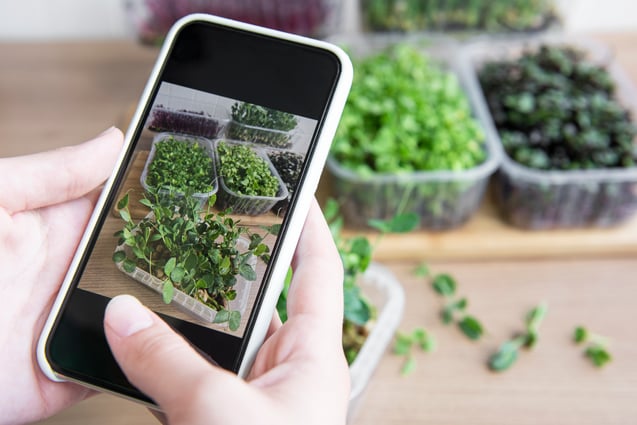
It can be really useful for busy gardeners or beginners to grow healthy plants without much daily work.
Key features of this app idea may include watering schedules, tracking plant health, and alerts for needed adjustments to improve growth. Users can also get tips on how to care for specific plants, whether they are indoors, vegetables, or herbs.
With IoT, users can automate watering systems and climate controls to ensure that plants receive what they need without constant monitoring.'
Productivity and Utility Applications
48. Smart Task Manager with AI Prioritization
The app reads deadlines, dependencies, urgency, and how someone actually works, then orders the list and books the work into open calendar slots. Priorities shift during the day, and the schedule reshuffles around them.
Be honest about the field here. Motion and Reclaim already do AI auto-scheduling, and Todoist has a fifteen-year head start on habit. A new entrant needs a specific user whose workflow the incumbents handle badly, whether that is agency staff tracking billable hours across clients or field engineers whose day is dictated by travel time.
Performance metrics are the retention hook. Showing someone that their deep work dropped 30% the week they took on two extra meetings gives them a reason to open the app on a Monday.
49. AI File Organizer for Cloud Storage
Build this against Drive, Dropbox, and OneDrive rather than the phone's local storage, since iOS sandboxing blocks the local version entirely and Android gates the necessary permission behind Play Store review.
The app reads file contents rather than filenames, sorts by project and client and document type, renames inconsistently saved files to one convention, and flags duplicates and near-duplicates. Semantic search finds the contract someone remembers by subject and not by name.
Teams are the paying customer. An individual tolerates a messy Drive. A twelve-person agency where four people have saved the same asset under four names loses real hours to it, which makes this one of the more credible SaaS app ideas on this list.
50. Password Manager and Passkey Wallet
Storage, generation, autofill, biometric unlock, and breach alerts covering saved credentials.
The category has changed, though. Apple, Google, and Microsoft all ship passkeys now, and every major platform is moving sign-in away from passwords toward device-bound credentials. An app launching in 2026 as a password vault is building for a shrinking problem, while one built around passkey management with password storage as the legacy layer is positioned for where authentication is going.
Security-critical software deserves a warning. Never write your own cryptography, use audited libraries, and budget for a third-party security review before launch. A breach in this category ends the company.
51. Digital Identity and Credential Wallet
Passports, driving licences, professional certifications, and academic qualifications held in encrypted storage, with selective disclosure so a bar sees that someone is over 18 without seeing their address.
Build on the standards, not blockchain. ISO/IEC 18013-5 governs mobile driving licences, and the EU Digital Identity Wallet framework under eIDAS 2.0 obliges every member state to offer a wallet by the end of 2026. Government issuers and large verifiers are implementing against those specifications, so an app using a proprietary or blockchain-based scheme cannot interoperate with any of it.
The opening for a private app sits in credentials governments do not issue. Trade certifications, professional memberships, training records, and right-to-work documentation all still travel as PDFs and photographs, and employers verifying them do it by eye.
Pet and Animal Applications
52. Virtual Vet Consultation and Emergency Care App
Pet owners face a gap between "this seems off" and a clinic appointment three days out. The app connects them to a licensed vet by video for advice, with symptom triage running before the call to flag whether this is a wait-and-see or a get-in-the-car situation.
Most US states require a VCPR established through in-person examination before a vet can diagnose or prescribe remotely, and only a few allow that relationship to begin electronically. An AI layer that narrows possibilities and routes the owner to the right level of care sits comfortably inside those rules. One that outputs a diagnosis does not.
The emergency layer earns its place at 2 am. First aid guidance for choking, bloat, and poisoning, a live list of 24-hour clinics with current wait times, navigation to the nearest one, and the pet's records ready to hand the vet on arrival.
53. Pet Medication Reminder App
Never miss a dose again, even for your pet!
This app idea focuses on sending timely reminders for pet medications, including dosage and frequency.
It can also integrate with online pharmacies that enable automatic refills and direct purchases. So, you do not have to worry about rushing for the medications, and you can always have the necessary medications on hand.
54. Pet Grooming Scheduler App
Finding and booking grooming appointments for a pet is indeed complex. However, an innovative app idea like a pet grooming scheduler can help pet owners find trusted, highly-rated groomers nearby. With just a few taps, they can schedule appointments that fit their busy lives.
The app also sends customizable reminders for upcoming appointments so the pets never miss a grooming session. It also offers personalized grooming tips based on the pet's breed, coat type, and seasonal needs.
55. Lost Pet Finder App
Using AI and image recognition, this app idea can help locate lost pets by scanning uploaded photos.
When a pet goes missing, owners can upload clear photos of their pets to the app. The app will then analyze the images and search locally found pet reports for matches.
Users who find animals that seem lost can also report them in the app. This feature encourages people to help each other and creates a community effort to reunite pets with their families.
56. Pet Training App
This app idea can offer step-by-step training guides and video tutorials to the pet owners. By using advanced AI, it can generate personalized training plans tailored to a pet’s breed, age, and behavior.
With this, users can easily monitor their pet's progress over time, receive daily challenges that keep training exciting and fresh, and connect with experienced professional trainers.
Conclusion
Coming up with great mobile app ideas can be tough. But there's no shortage of innovative concepts waiting to be discovered. We hope this blog helped you find your inspiration to create the next big mobile app and launch it into the digital spaces seamlessly.
Now, it's time to take the next step: converting your digital business idea into a tangible product. Ready to build? Hire developers, and let's make some magic happen.
You've got the spark—now the real work begins. Turning your digital business idea into a reality requires a skilled team. Hire developers and start building your future.
Frequently Asked Questions

Roughly $30,000 to $60,000 for an app calling an existing AI API, $80,000 to $150,000 with custom workflows and integrations, and $200,000 upward if you train your own model. Offshore teams in India run $25 to $50 per hour against $120 to $200 in the US. Budget for inference cost separately, since every AI feature charges you again each time a user touches it.
Not meaningfully. Ideas cannot be patented, though a specific technical implementation sometimes can. Sign an NDA with your development partner. Investors will refuse one, and stopping a competitor who reached the same big idea independently is nearly impossible. Speed and distribution are the real defence.
An API covers most cases. Existing models handle natural language processing, summarization, and reasoning for the bulk of AI app development, and they ship in weeks. Train your own only when you hold proprietary data nobody else can get, or when inference spend at scale outgrows training cost. Computer vision on a narrow domain is the usual exception.
Follow revenue per user in your target market. iOS earns more in the US, UK, Japan, and Australia. Android carries the volume across India, Brazil, Indonesia, and most of Africa. React Native and Flutter are mature enough that building apps for both at once is reasonable unless the product is graphics-heavy.
Three to four months with a small team and a realistic scope. Regulated data, hardware, or a two-sided marketplace pushes it past six. Overruns nearly always come from features added after the spec was signed off.

By Mangesh Gothankar


By Ashwani Sharma
By Achin Verma







 4.8 out of 5 by