
-
 Custom TMS, WMS & Fleet Platforms
-
 ERP, EDI & Carrier Integrations
-
 Fixed-Scope Discovery to MVP
-
 Dedicated Team or Project Delivery


Dispatch on Spreadsheets
Planners assign loads from spreadsheets and phone calls. Double bookings slip in, and customers often hear about a delay before you do.

Disconnected Systems
Your TMS and ERP show different numbers, and carrier portals add a third version. Staff spend hours copying data between screens.

No Live Shipment Visibility
When a customer asks where their load is, someone phones the driver. It eats time all day long.

Margin Leaks You Can’t Trace
Empty miles, detention fees, and failed deliveries chip away at profit. Without clean data, finance can’t tell which lanes or customers cause the loss.

Packaged Software Limits
Vendor tools often charge extra for every change. Licence fees rise with each new user, and the workflow still follows the vendor’s template.

Growth Outpacing the System
A new depot, carrier, or market adds load the old system was never sized for. Slowdowns show up first at peak season.
If any of these sound like your operation, tell us where it hurts and we’ll show you what a better setup could look like.

Freight Brokers & Forwarders
Manual carrier sourcing and slow quotes cost brokers loads, and paperwork sits in too many places. We build a digital freight platform that carries a shipment from quote to invoice in one system.
-
Carrier network and load matching
-
Automated quoting
-
Document handling
-
Invoicing
-
What we aimed for:
A faster quote-to-book cycle and fewer manual touches per load.

Carriers and Trucking Companies
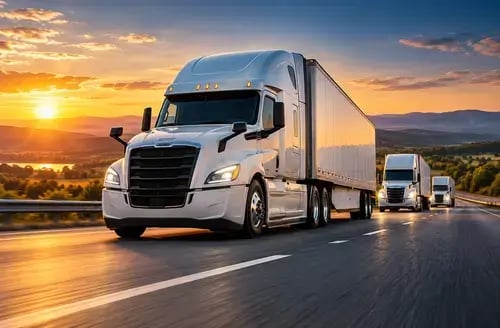
Empty miles, driver turnover, compliance paperwork, and slow billing drag on carriers. Our transportation and logistics software development team builds a TMS around dispatch and settlement, so drivers and the back office work from the same data.
-
Dispatch optimization
-
ELD and telematics integration
-
Driver app
-
Automated settlement
-
What we aimed for:
Higher asset utilization and shorter days-to-invoice.
3PL and Warehousing Providers
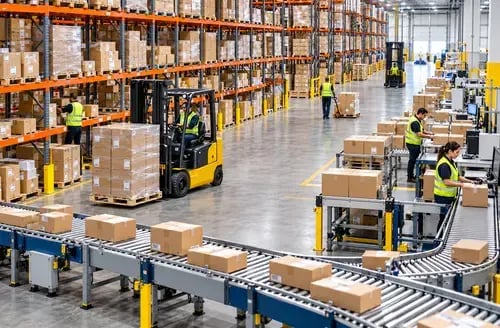
Running inventory and billing for several clients at once gets complicated fast. We build a multi-tenant WMS that keeps each client’s stock and charges separate and easy to follow.
-
Multi-tenant WMS
-
Client portals
-
Activity-based billing
-
Automation integrations
-
What we aimed for:
Better inventory accuracy and clearer billing.
Shippers, Manufacturers & Retailers
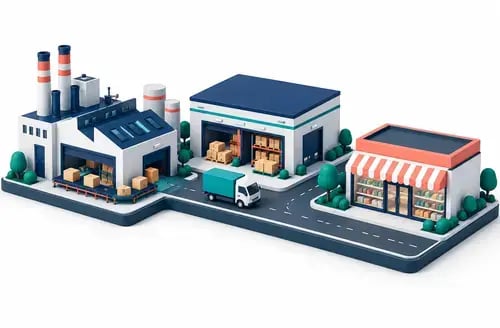
Carrier performance is hard to judge when ERP and shipping data sit apart. We connect the two and add visibility on top, so your team spots problems early.
-
Shipment visibility
-
Carrier scorecards
-
Freight audit
-
ERP-integrated control tower
-
What we aimed for:
Lower freight spend and earlier handling of exceptions.
Last-Mile & Courier Companies
Failed deliveries and hard-to-track drivers hurt margins, and customers expect exact delivery times. We build the full path from dispatch to doorstep in one system.
-
Auto-dispatch
-
Route optimization
-
Driver app
-
Customer notifications and proof of delivery
-
What we aimed for:
A higher first-attempt delivery rate and fewer “where is my order” contacts.

Fleet Operators
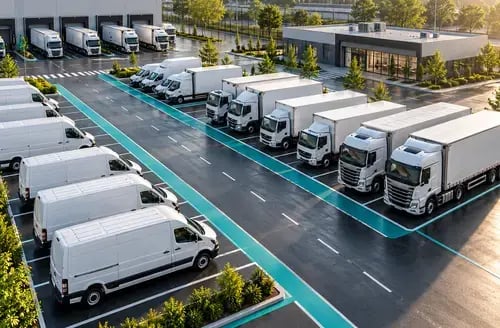
Unplanned downtime and fuel costs eat into fleet margins, and safety compliance adds its own workload. We build fleet management software that flags problems before they take a vehicle off the road.
-
Predictive maintenance alerts
-
Fuel analytics
-
Driver scoring
-
Telematics integration
-
What we aimed for:
Less downtime and a lower cost per mile or kilometer.
Logistics Startups
A new logistics product has to look credible without being overbuilt. We build a lean MVP on an architecture that can grow with your first customers.
-
Lean MVP
-
Scalable architecture
-
Investor-ready demo
-
Validation with real users
-
What we aimed for:
A launch inside a defined budget window, tested by real users.


AI Route & Load Optimization
Planning engines match loads to vehicles and build routes from your own history. Dispatchers spend less time planning, and trucks run with fewer empty miles.

Predictive ETA & Delay Detection
Models read past trips, live traffic, and weather to flag late shipments early. Your customers hear from you before they think to ask.

IoT & Sensor Integration
Temperature and location sensors report from the trailer in real time. Cold chain loads and high-value cargo get alerts the moment a reading drifts.

Computer Vision
Cameras at the dock inspect cargo for damage and count pallets automatically. That replaces manual checks at the busiest point of the day.

Warehouse Automation Integration
We connect your WMS to autonomous mobile robots, conveyor systems, pick-to-light and voice picking, so floor equipment follows the same task queue as your staff.

Document Automation
Gain valuable insights with our expertise in applying Big Data analytics. Our accurate analytics help businesses extract meaningful data from complex and extensive datasets. With our innovative data science and big data analytics solutions, you can make more informed decisions and drive your business growth.

Security and Compliance Standards We Follow in Logistics Software
Logistics platforms carry commercial rates, customer records, and shipment details. We protect that data from the first line of code, and the checks keep running after launch.
 02
03
04
05

Discovery
1We meet your dispatchers and ops managers to map workflows and systems, then deliver a scope document and estimate.

Design
2Your dispatchers, drivers and warehouse staff try clickable prototypes before any code is written.

MVP Build
3Short sprints with a demo every 2 weeks, and your most-used workflows go live first.

Test and Roll Out
4We test on your live systems, pilot at one depot, then expand in phases with training included.

Support and Scale
5Monitoring, SLA-backed support and new releases continue after go-live as your operation grows.

GoHire
Leading Application Tracking System (ATS) in Europe
Project Scope- GoHire wanted to build a robust hiring solution for SMEs globally that allowed them to hire the right candidates for their organization easily and quickly.
Solution Delivered- After a detailed discussion with clients regarding the project requirements, YTII recommended the Product Engineering Model of the Offshore Development Center
Read Full Story
Dorey Finance
Actuarial Technology (AcTech) company in Guernsey
Project Scope – The client wanted to upgrade its financial tool to improve user experience, reduce operational costs, and address performance issues caused by outdated technology.
Solution Delivered – We helped them deploy a senior developer within two weeks, upgraded tech stack, and optimized performance and overall operational efficiency.
Read Full Story

Finding You
Robust Dating App in Luxembourg
Project Scope – Finding You wanted to create a dating app combining astrology and psychometric analysis and build a budget-friendly, user-friendly matching engine.
Solution Delivered – The app was built with advanced astrological charting and filtering features, while marketing efforts helped expand the user base globally.
Read Full Story
Gettrx
Leading Payment Gateway in US
Project Scope – Gettrx sought a dependable team of experienced IT resources that took care of end-to-end development and management of the solution while ensuring code standards were being met at all time.
Solution Delivered – Your Team" in India deployed highly skilled software engineers with 6+ years of experience in handling complex product development in an agile work model
Read Full Story

Plena Data
Financial Process Automation (USA)
Project Scope – The client sought an offshore software development company that could provide them with the right talent to build premium-quality bots in a quick turnaround time while ensuring complete IP protection.
Solution Delivered – With a team of highly skilled professionals working on developing RPA solutions, the client was able to deliver high-quality bots to their customers quickly and efficiently.
Read Full Story

Using offshore development services by Your Team in India, we hired highly skilled developers who helped us build a robust and scalable candidate automation solution. Their hands-on project management and seamless communication never made us realize we were working with an offshore partner.

We were highly impressed by the hands-on approach shown by Your Team in India. After understanding our requirements, they quickly arranged interviews with their talented developers. Our offshore team was ready and working on the project within a few days. We worked with highly-talented and experienced developers who helped us improve the product while ensuring they met all delivery milestones.

We could not have asked for a better partner than Your Team in India to manage our product. Our offshore development team of experts always shares insights on improving our solution.

Your Team in India is genuinely a partner you can count on. With over 1.5 years of experience working with them, I have witnessed their unwavering commitment to understanding their clients' passions and delivering exceptional results. I highly recommend them as a reliable and dedicated outsourcing partner.

Amit and his team are great. They were able to complete the requested job faster than I had expected and went above and beyond to identify things I was unaware of. They went on to make these other small corrections without additional cost during the updates. I have hired this team before and will hire them again, as I am reminded of their high level of professionalism, integrity and ability... Thanks Amit !!.

Your Team in India has been our partner since the start of TeleCloud’s automation journey. Their in-depth consulting capabilities, easy to comprehend plans and a ground up, practical implementation approach helped us automate multiple processes within the organization. At present, YTII has implemented more than 50+ bots that sort various day to day accounting, book keeping and compliance related processes for TeleCloud. We believe our drive for automation has just begun and will continue till we enable a bot for every process that can be automated.

Your Team In India's pool of talent is incredibly efficient. They gave us unabridged access to the best full stack developers, enabling us to build an amazing product- one that’s best to our capabilities.

It builds and maintains the software that moves and stores goods, such as TMS, WMS, fleet, routing, and tracking platforms. A good partner also helps define requirements, links the new system to the tools you already run, and supports it after launch. Our logistics software development services cover that whole path.
A focused MVP typically runs from $25,000 to $60,000, and enterprise platforms with several modules go past $200,000. Integrations, live tracking volume, and compliance needs move the price most. A discovery phase turns the range into a firm estimate.
An MVP usually takes 2 to 4 months. A full platform with several integrations and mobile apps takes 6 to 12 months. We release in phases, so your team starts using working features well before the final launch.
Yes. We connect through REST and SOAP APIs, EDI, webhooks, and middleware. During discovery, we review your systems and flag any limits early, before they affect the schedule.
Often we can. We review the code and architecture first, then recommend whether to refactor, move to a new platform or replace it. The choice depends on which option carries the least risk for your daily operations.
Data is encrypted in transit and at rest, and access is role-based with full audit logs. We test regularly and can host in the region your regulators require. An NDA is signed before we see any of your information.
You do. Ownership of the IP passes to you as the project moves forward, and you get full access to the repositories and infrastructure.
Yes. Monthly plans cover maintenance, monitoring, and new features, backed by an SLA.
Yes. Most of our clients are in the US and Europe, and our team overlaps with your working hours for regular video calls.





 4.8 out of 5 by